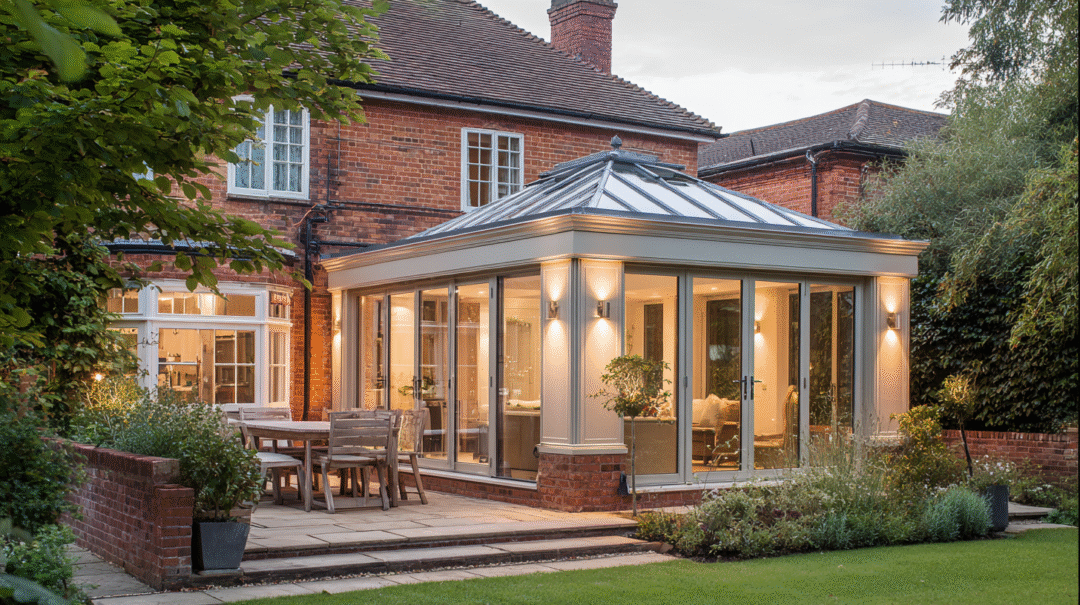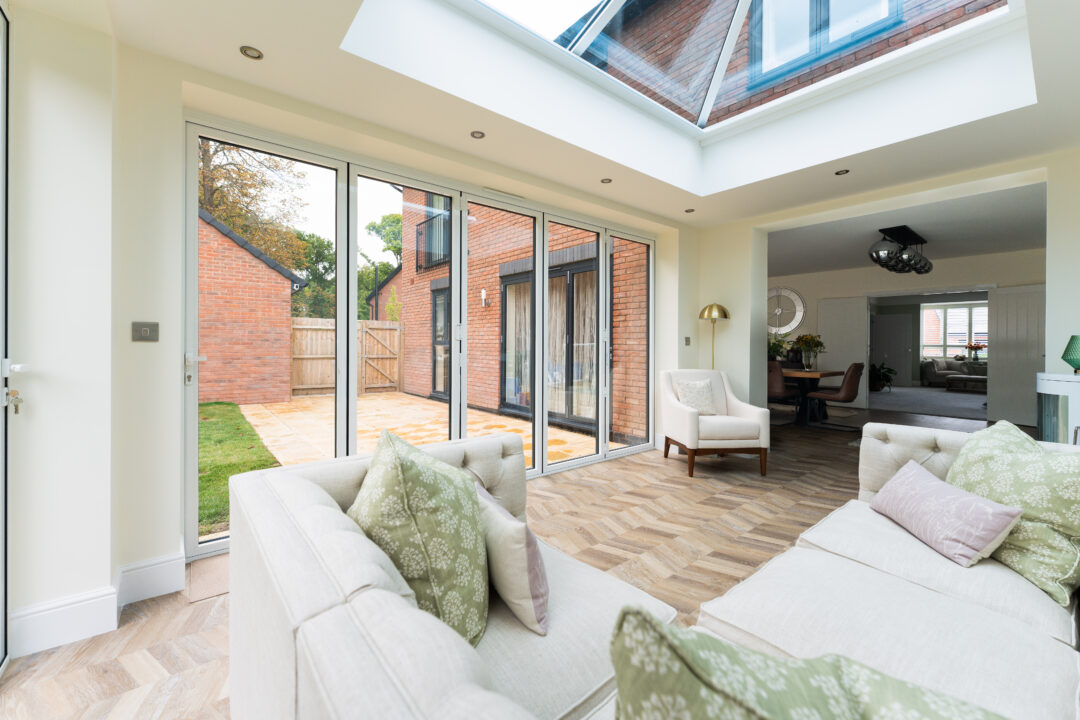
Read time: 8-9 minutes
Many homeowners want open-plan living. However, they often feel dread at the thought of the process. Removing the rear wall of your home sounds major. Risky. Disruptive.
When well designed and managed, an open-plan space can avoid turning your home into a building site. In some layouts you can open up the back of the house without needing major steelwork.
This guide covers what happens when you knock through walls, when you need steel, and when you don’t. It also explains how orangeries are made for open-plan living and helps you choose the right structure for your lifestyle.
The Short Answer
-
Open-plan living does not always require removing the entire rear wall.
-
Structural steel is only needed when openings are widened or newly created.
-
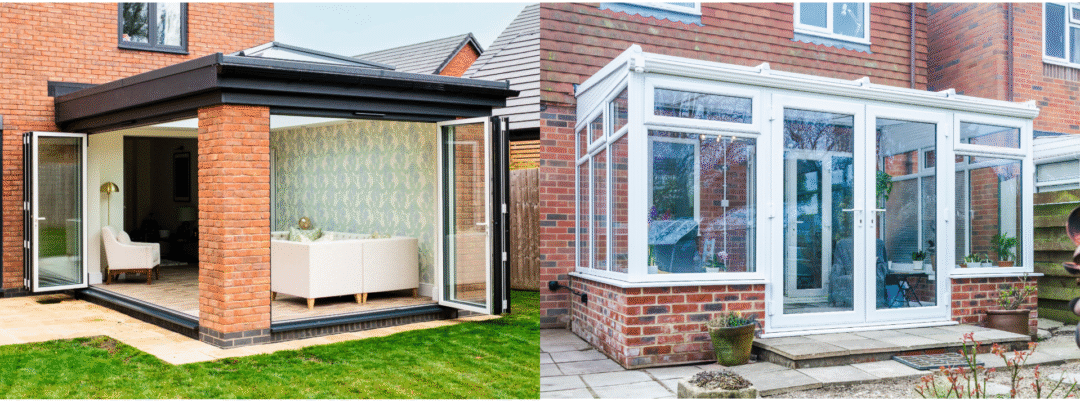
A modern orangery is built to the same standards as a flat-roof extension.
-
Orangeries retain more natural light in open-plan layouts.
-
If you create a new opening and fit a door, Building Regulations usually apply only to the steel; if you leave the opening fully open, they apply to the steel and the structure.
-
The right solution depends on layout, light, structure and disruption, not product labels.
The real question is not whether an orangery is a proper room.
It is what structure and layout suit your home and lifestyle best.
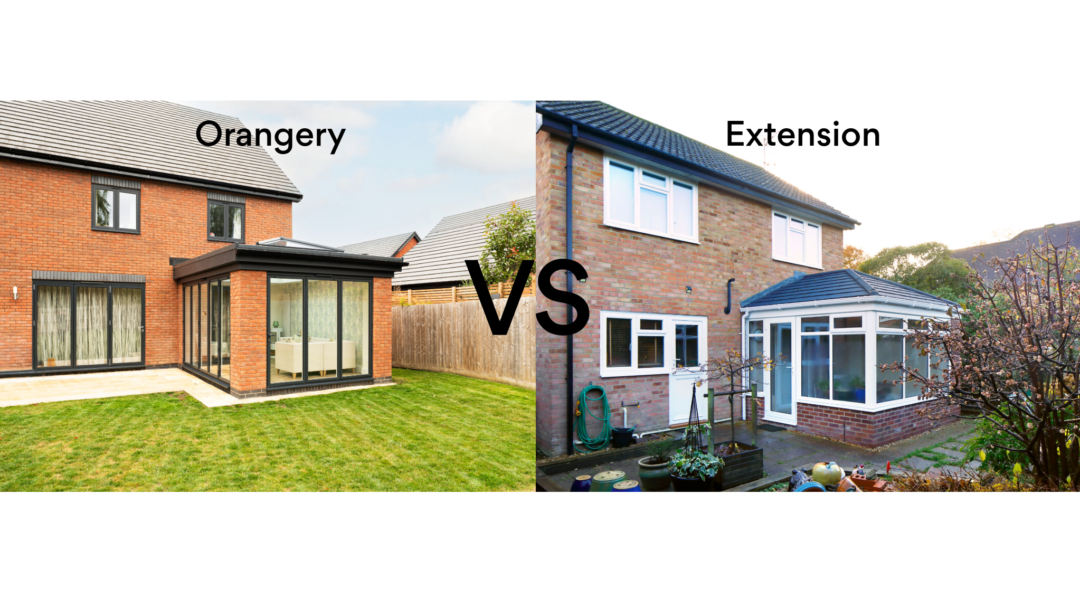
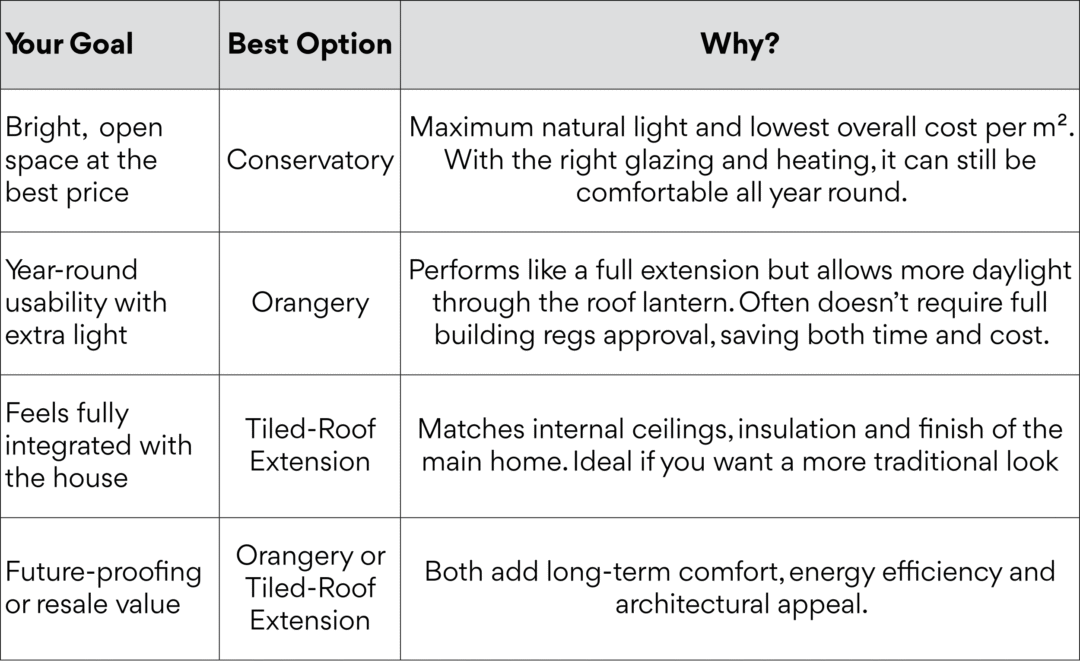
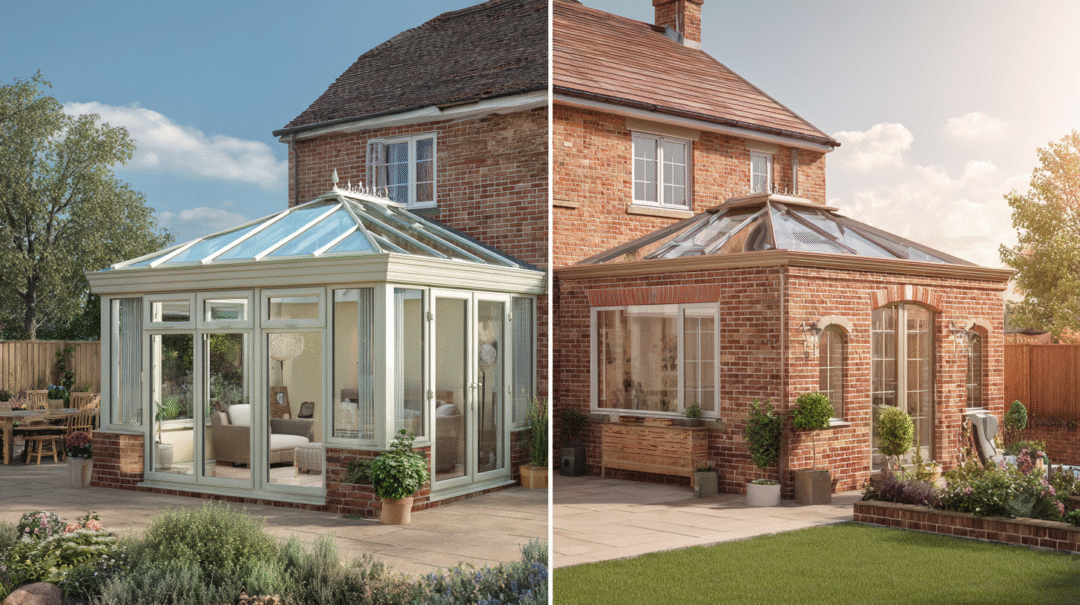
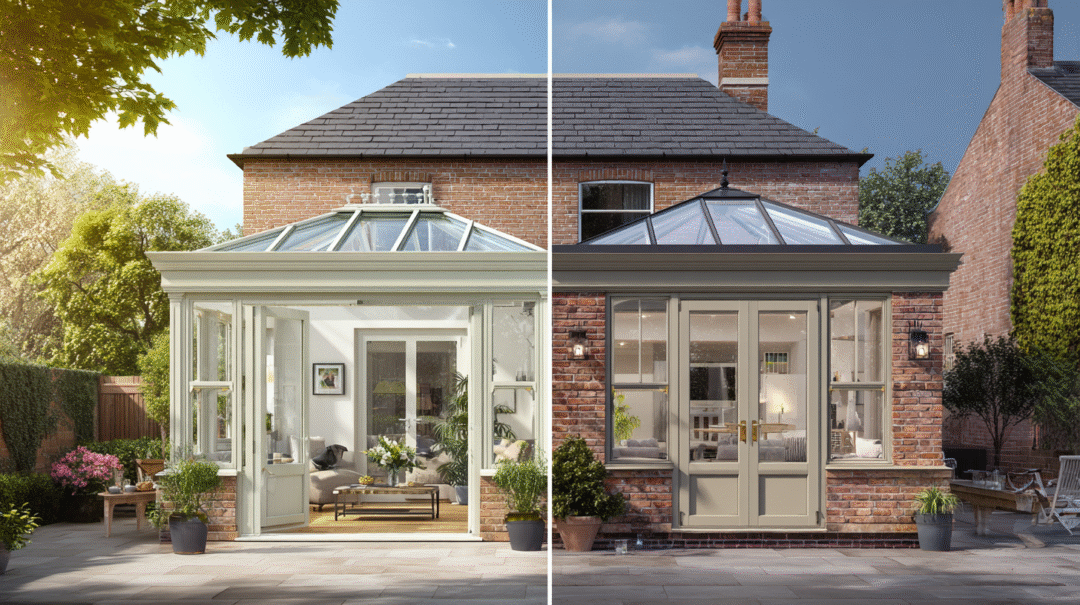
At a Glance: Orangery vs Extension for Open-Plan Living
- Structure
- Both are permanent extensions built to full Building Regulations.
- Both are permanent extensions built to full Building Regulations.
- Light
- Orangeries retain and introduce more light into existing rooms.
- Orangeries retain and introduce more light into existing rooms.
- Roof
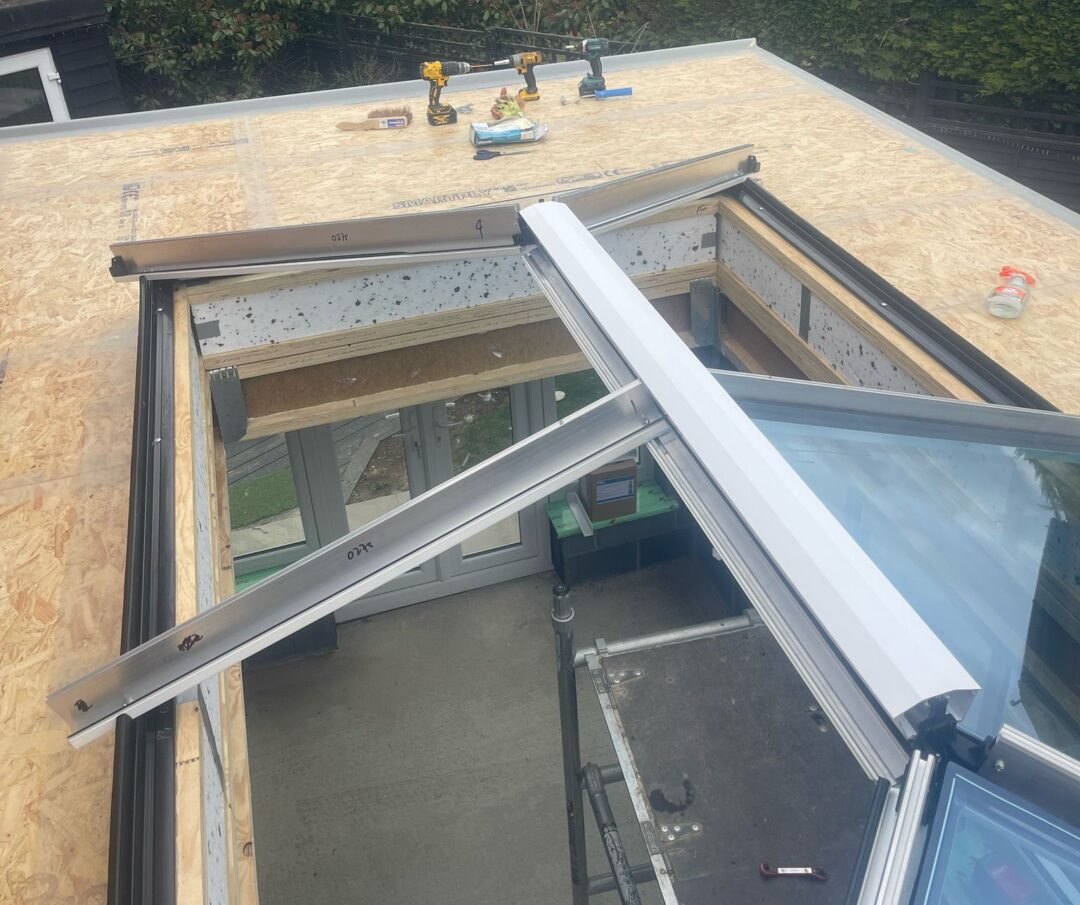
- Orangery uses an insulated flat roof with lanterns. Extensions may be fully solid.
- Orangery uses an insulated flat roof with lanterns. Extensions may be fully solid.
- Open-plan layouts
- Orangeries are designed to integrate large openings cleanly.
- Orangeries are designed to integrate large openings cleanly.
- Look and feel
- Orangeries create a feature space. Extensions are more traditional.
- Orangeries create a feature space. Extensions are more traditional.
- Disruption
- Both require knock-through works if fully open-plan.
If you want a deeper comparison of insulation, comfort and performance, we’ve covered that in detail here.
Each of these points is explained in detail below.
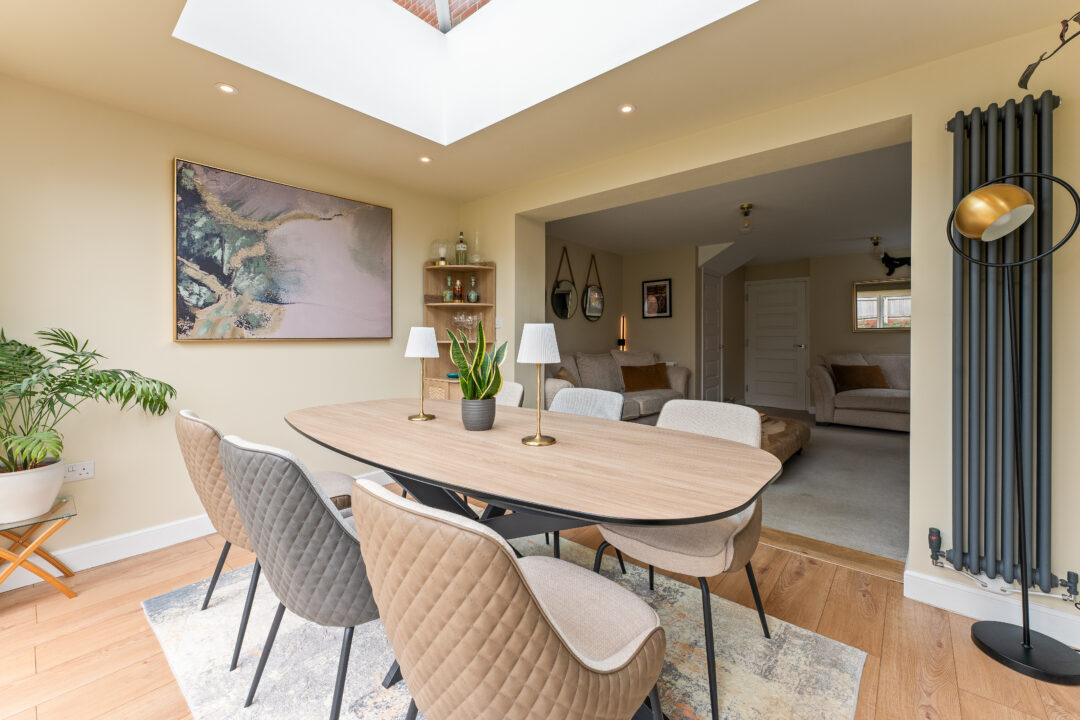
What Open-Plan Living Actually Means in Real Homes
Open-plan living is not one single layout.
In real homes, it usually means one of three things:
- Removing an existing set of doors or windows.
- Widening an existing opening.
- Removing most or all of the rear wall.
Each option has a very different impact on structure, cost and disruption. Many homeowners assume full removal is the only route. Often, it is not.
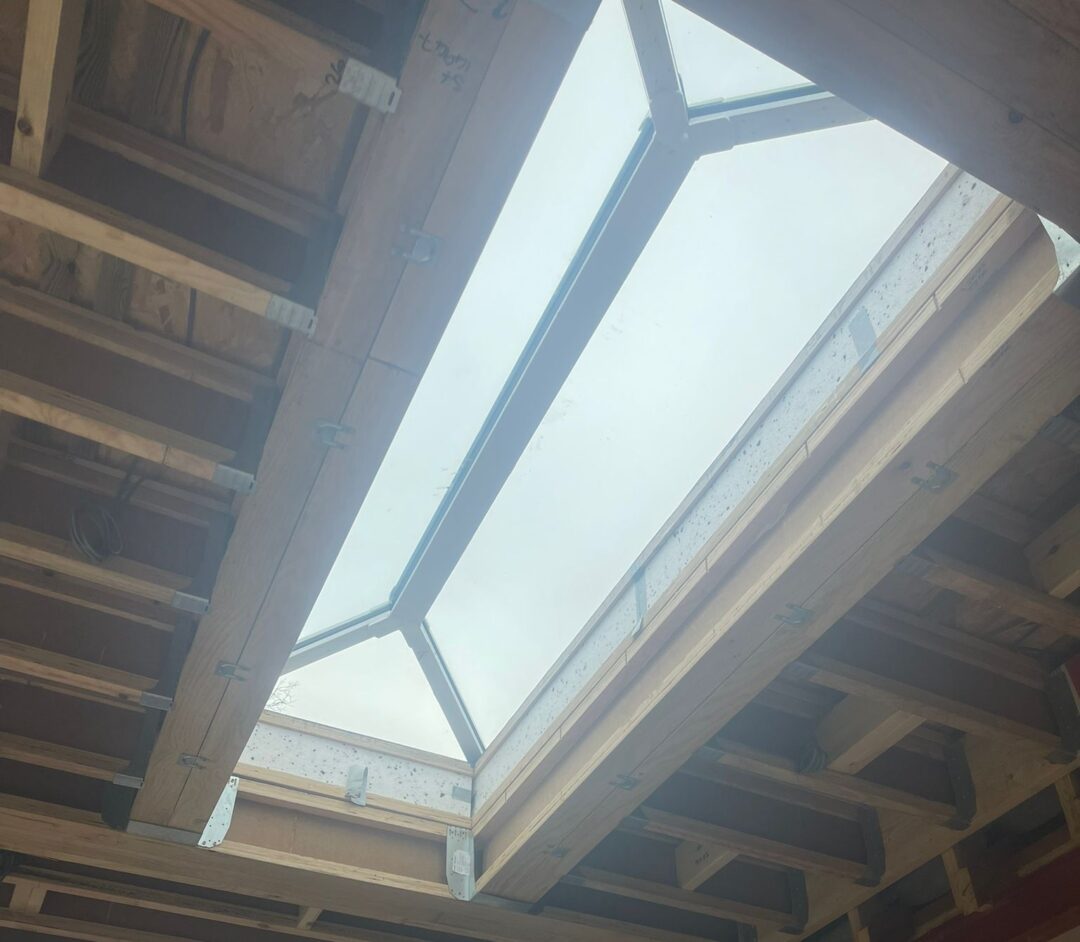
Structure and Performance: Why an Orangery Is a True Extension
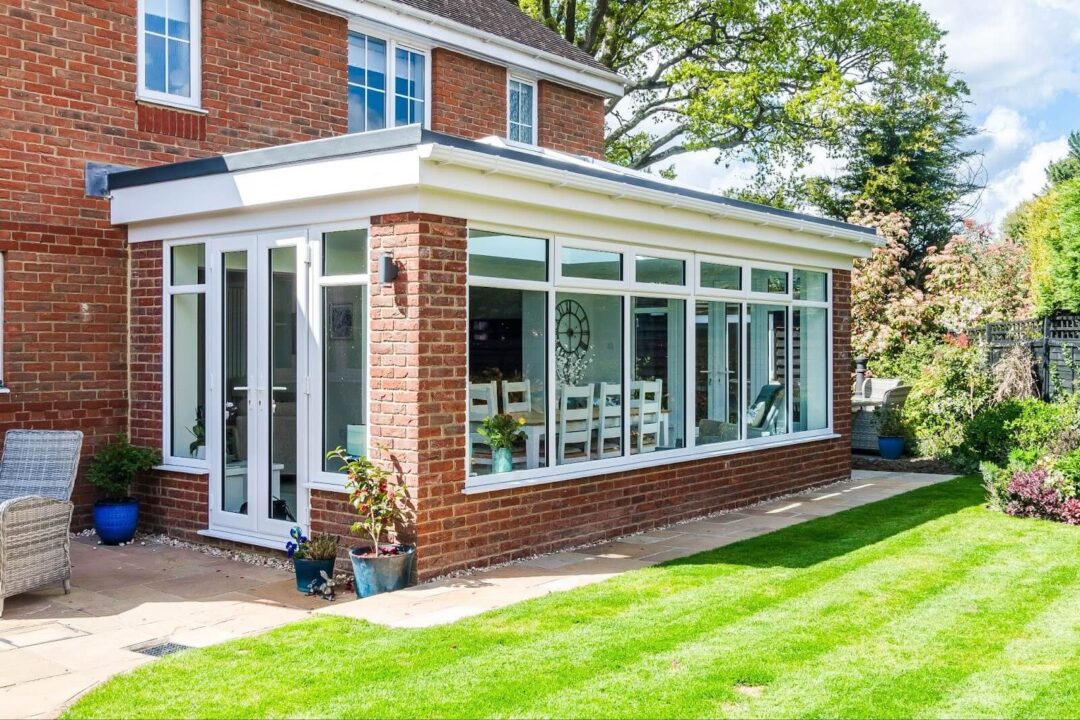
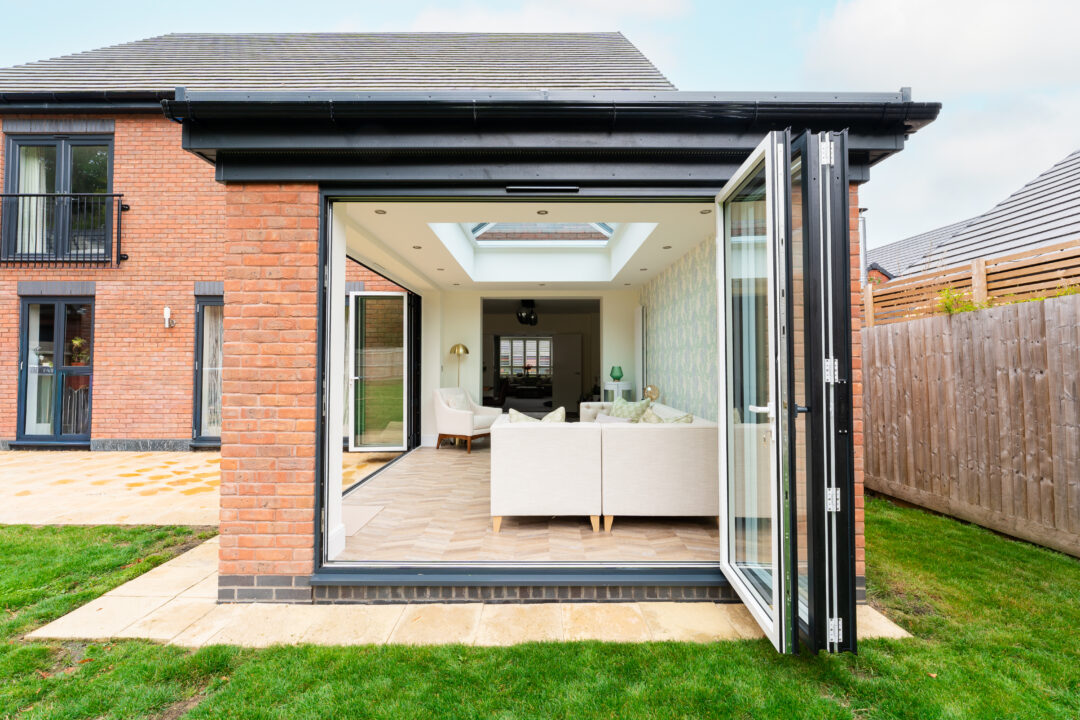
A modern orangery is constructed to the same standards as any flat-roof extension.
This includes:
- Proper foundations.
- Insulated cavity walls.
- Full compliance with Building Regulations where they apply
- Permanent, habitable construction.
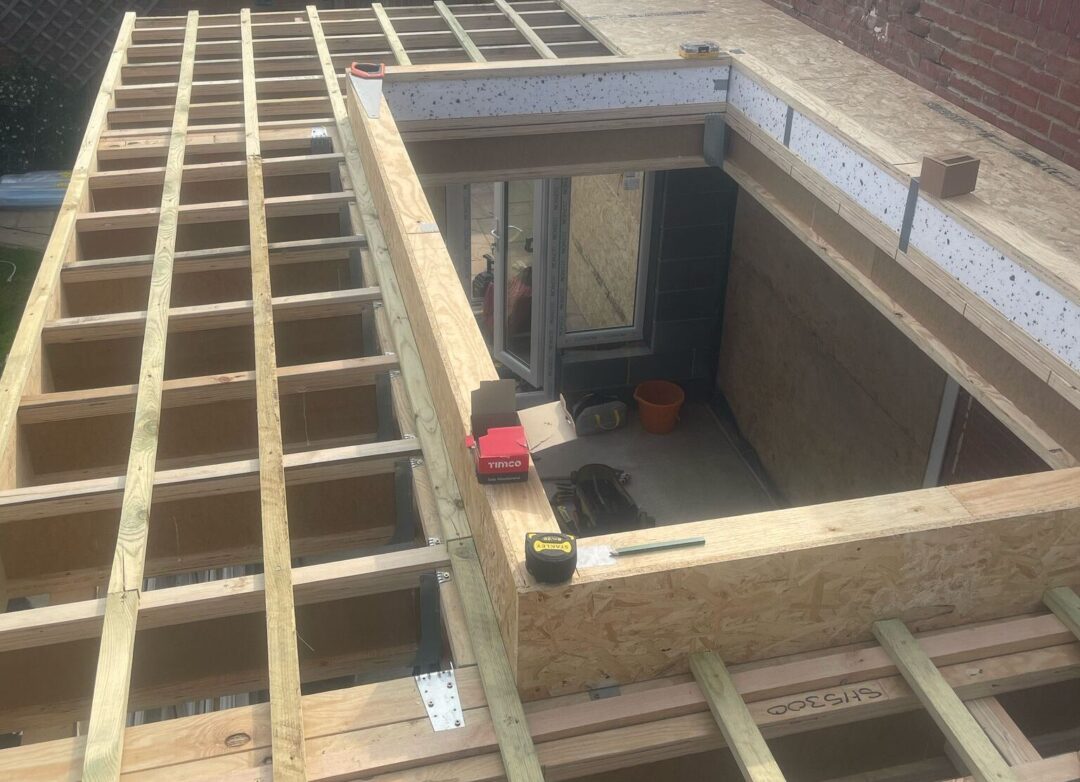
Our orangery systems use over 200mm of roof insulation, compared to around 150mm in many standard warm-roof systems. This delivers strong thermal performance and stable internal temperatures all year round.
In performance terms, there is no compromise. The difference is architectural design, not comfort or durability.
Roof, Insulation and Heating in Open-Plan Spaces
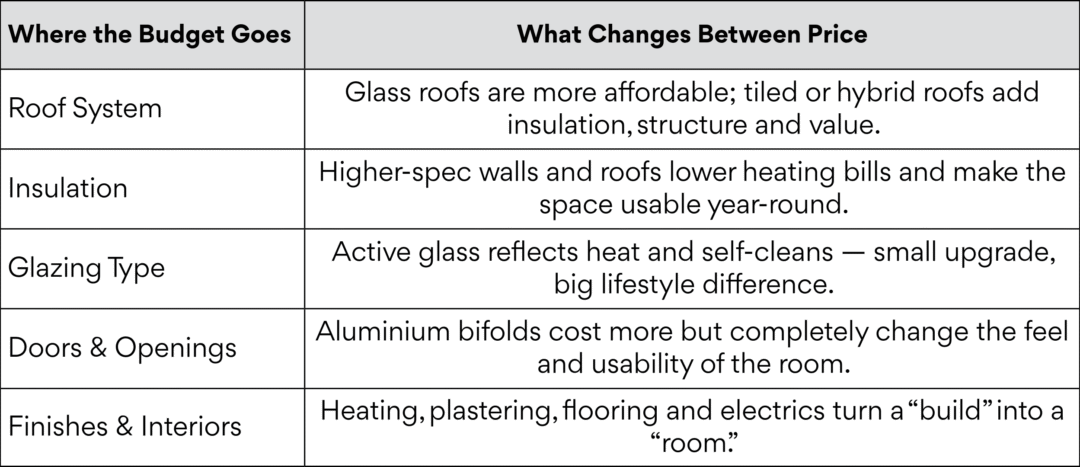
Heating becomes more important once a house is opened up.
When internal walls are removed, heat moves differently through the home. A well-designed orangery accounts for this from the start.
Key considerations include:
- Insulation levels that prevent heat loss through the roof.
- Maintaining warmth in both the new space and the existing room.
Heating layouts that suit larger, connected spaces.
With modern insulation standards, an open-plan orangery can be heated just as efficiently as the rest of the house. There is no inherent increase in running costs when it is designed properly.
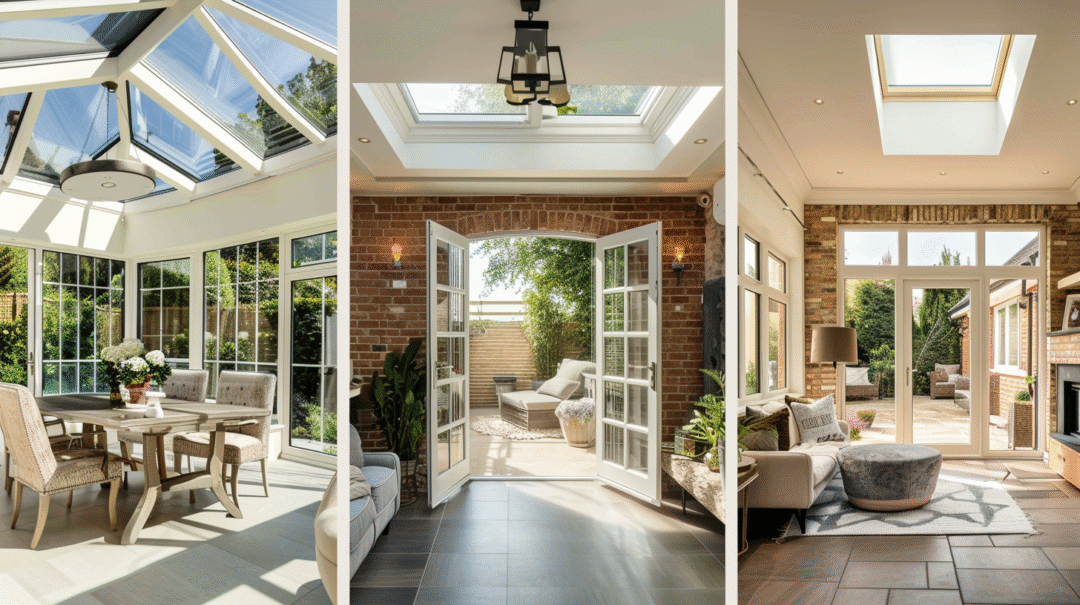
Light: Why Orangeries Work So Well for Open-Plan Living
Light is the factor most homeowners overlook.
When you knock through the rear wall of a house, you are not just adding a new space. You are also affecting the light levels in the existing room you are opening from.
This is where orangeries excel.
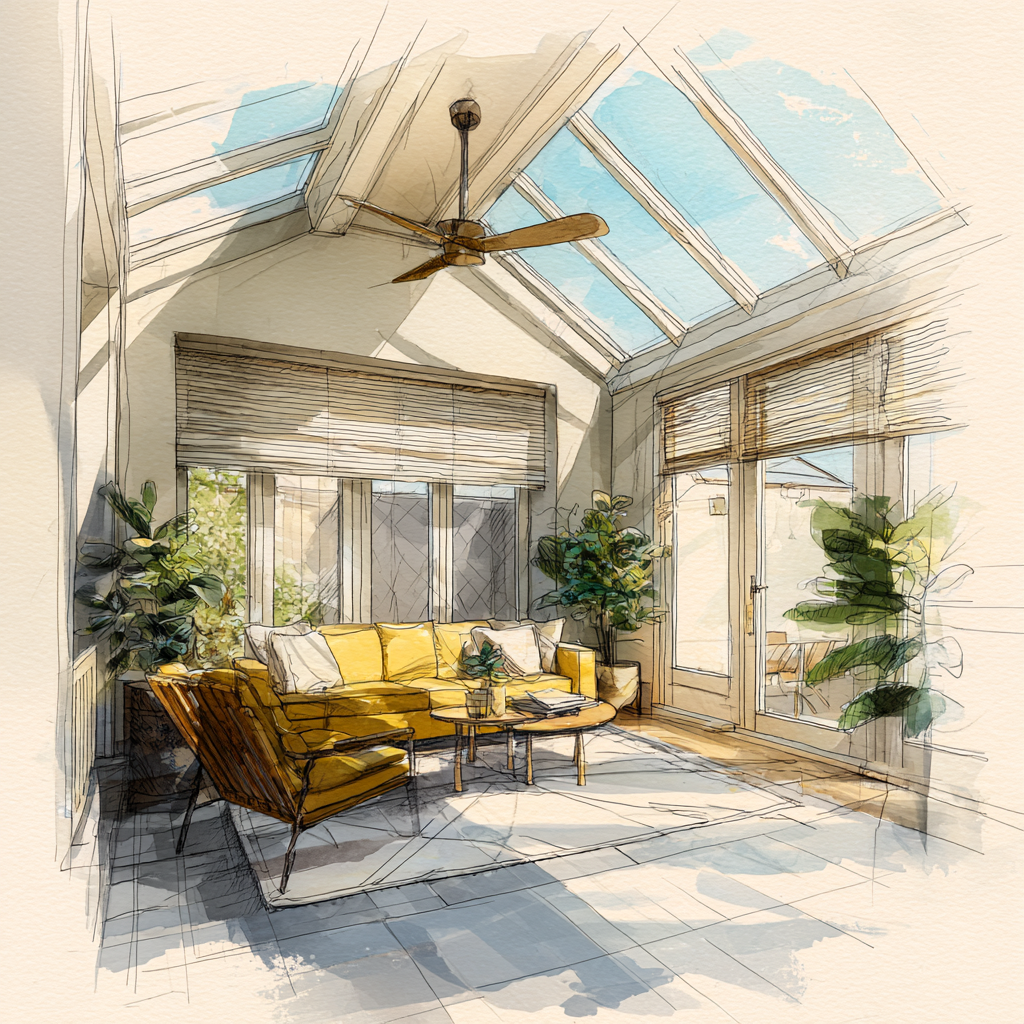
Features such as:
- Roof lanterns.
- Reduced full-height glazing balanced with solid walls.
- Carefully proportioned openings.
- Allow light to travel deeper into the original home.
With a fully solid roof extension, restoring lost light later can be difficult and expensive. With an orangery, light is designed in from the beginning – especially when paired with the right glazing.
What really changes when you knock through (and when you need steel)
Knocking through is usually the most worrying part for homeowners. Understanding what actually happens helps reduce that fear.
Structural Support
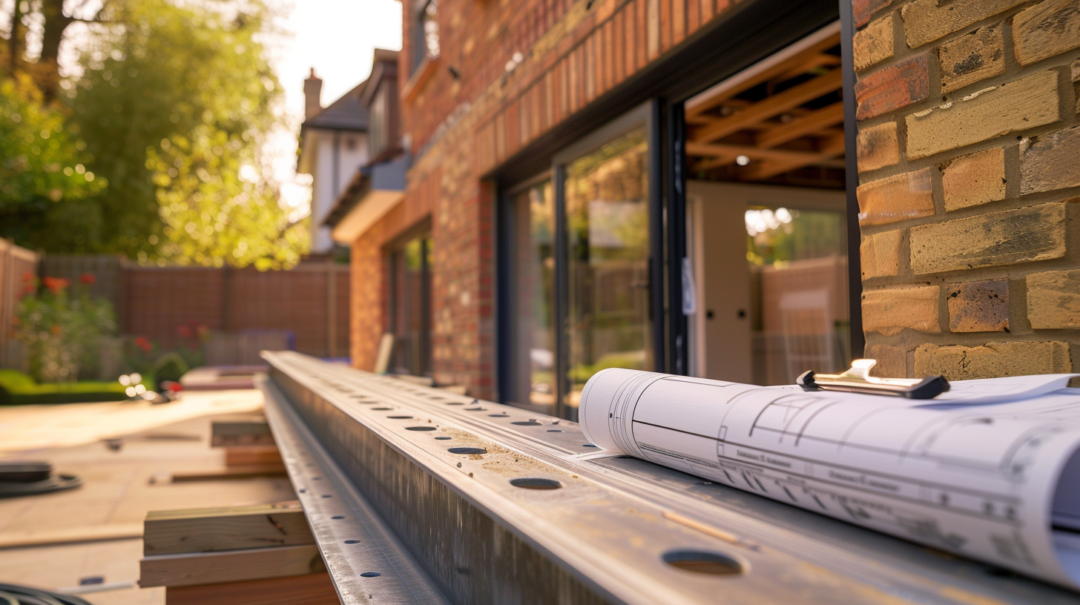
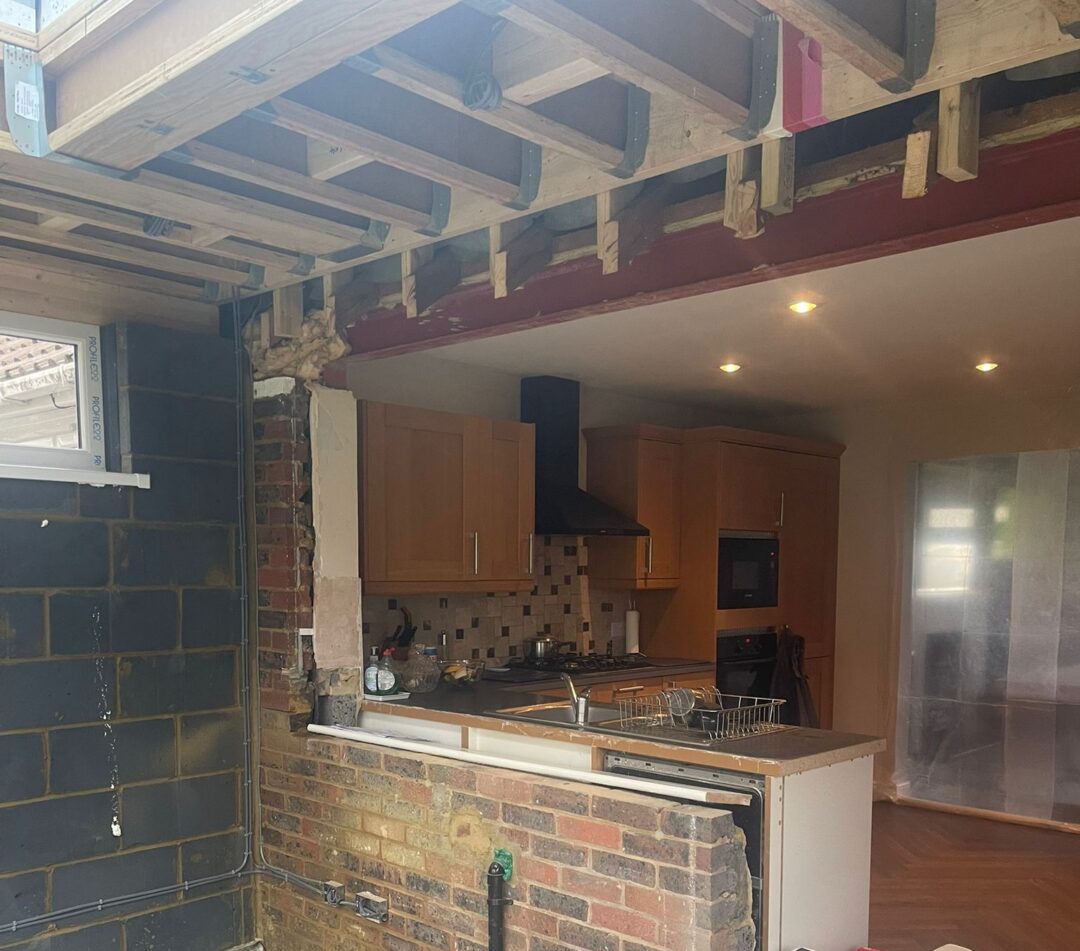
When you enlarge an opening or remove part of the rear wall, the load above must be supported.
This is done with structural steel.
Steel is required when:
- A new opening is created.
An existing opening is widened, even by 100–200mm.
Steel is not required when:
- Doors or windows are removed without enlarging the opening.
Examples where steel is often not needed:
- Removing French doors to the garden.
- Removing a kitchen door and adjacent window while keeping the original opening width.
Services and Drainage
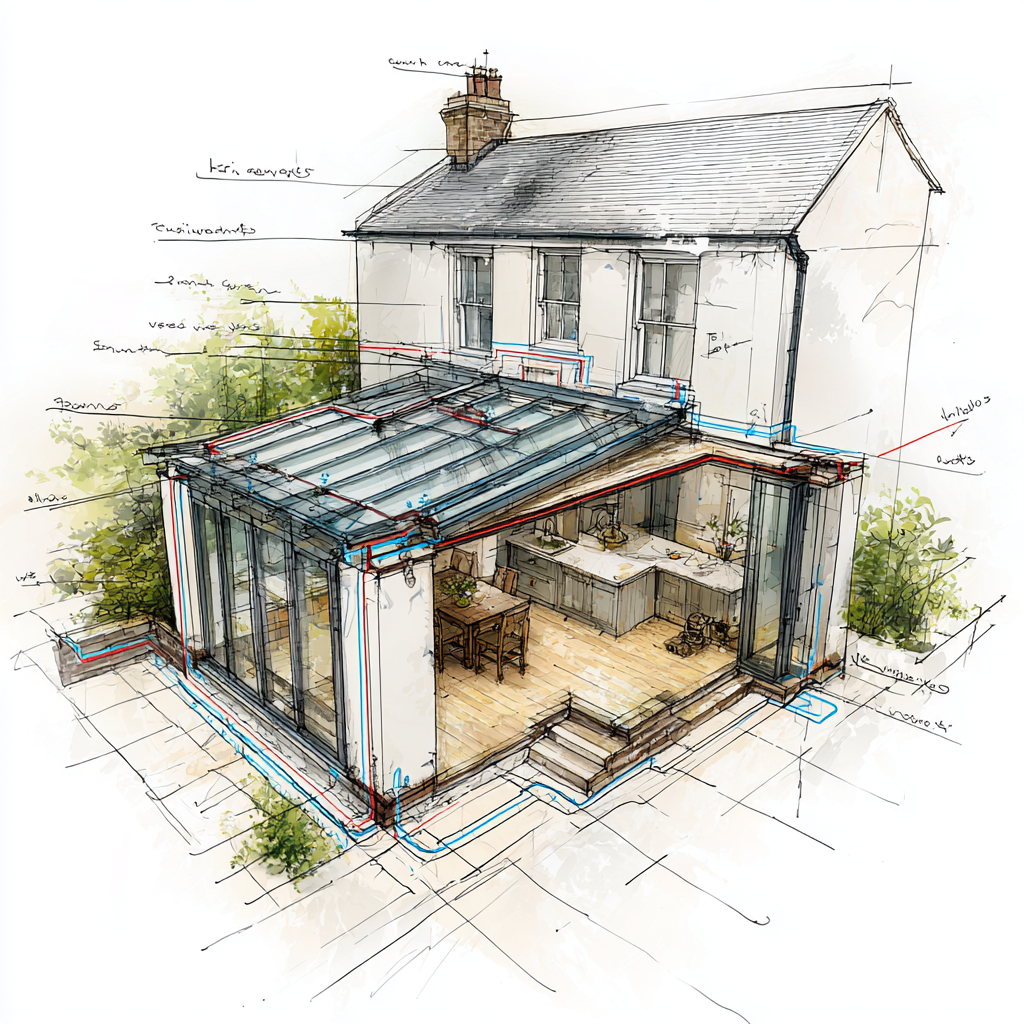
Anything fixed to the rear wall must be addressed before knock-through works.
This includes:
- Downpipes.
- Waste pipes.
- Taps and sinks.
- Electrical points.
Rerouting is usually straightforward. Complexity increases when there are multiple waste pipes or soil stacks, which is why layout planning matters early.
Making Good
After the structural work is complete, finishing work brings the home back together.
This includes:
- Closing wall cavities.
- Plastering internal and external surfaces.
- Screeding floors where walls or doors were removed.
- Preparing surfaces so flooring and finishes can be installed easily.
The goal is always to leave the space move-in ready, not half finished.
Keeping Part of the Rear Wall vs Full Knock-Through
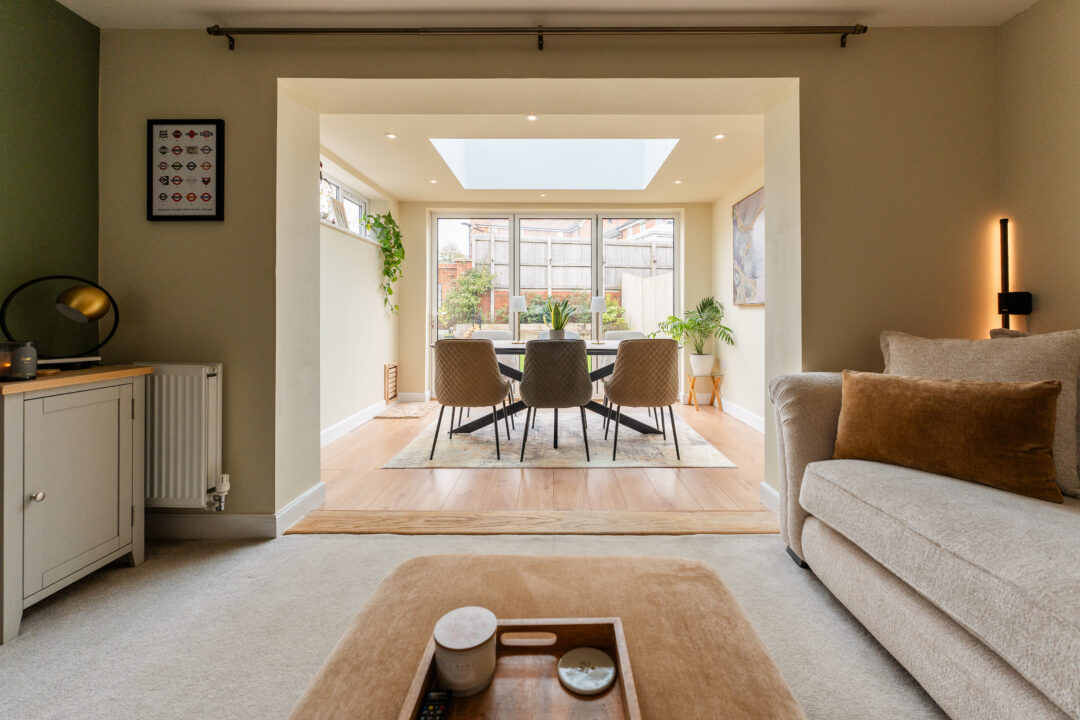
This is one of the most important design decisions.
As soon as you meet any of the following conditions, costs increase:
- Widening openings significantly.
- Introducing large steels.
- Relocating drainage and services.
- Creating flush ceiling steel insertions.
Keeping part of the rear wall can:
- Reduce steel size.
- Reduce disruption.
- Lower cost.
- Still achieve a strong open-plan feel.
Do You Always Need Steel to Go Open-Plan?
No – but you always need proper structural support.
In simple terms:
- New openings or wider openings almost always require steel or an equivalent structural solution.
- Keeping the existing opening size can sometimes be done without additional steel, if the original opening was properly supported and passes structural checks.
This is why some open‑plan layouts are significantly more cost‑effective than others: they work with the existing structure instead of fighting it.
Important note: the examples in this guide are for illustration only. On every project we:
- Survey the property
- Obtain structural calculations where required
- Agree the final knock‑through design based on what is safe, compliant and appropriate for that specific house
That’s how we keep costs sensible without taking risks with the structure.
What Changes the Cost of Steel Works
Steel cost is not just about the beam itself.
Key cost drivers include:
- Size: Larger openings require larger steels.
- Complexity: Welding to existing steels or complex load paths adds cost.
- Access: Most steels are carried in by hand. Difficult access may require lifting equipment or, rarely, a crane.
- Splice joints: Where access is tight, steels can be bolted together in sections to avoid heavy lifting.
Most projects do not require cranes. Where they do, costs can increase by £1,000–£2,000.
Types of Steel Insertion
Ceiling Level
- Stepped steel: Steel sits below the existing ceiling line. More common and more cost-effective.
- Flush steel: Steel is hidden within the floor structure above so ceilings run level. This costs more but creates a cleaner look.
Side Supports
Most steels require supporting pillars at each end.
In some cases, windposts can be hidden within wall cavities. This avoids visible pillars but increases cost and is used selectively.
When an Orangery Makes More Sense for Open-Plan Living
An orangery is often the better choice when:
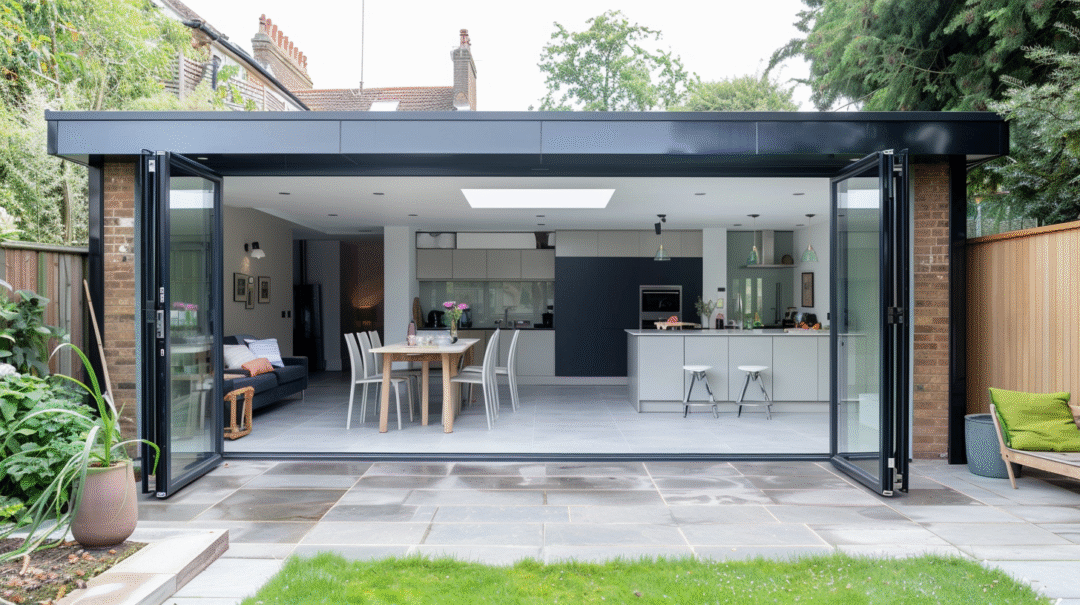
- You want to open a kitchen or diner to the garden but retain light.
- You want a feature space that still feels part of the home.
- You are concerned a fully solid roof will darken the centre of the plan.
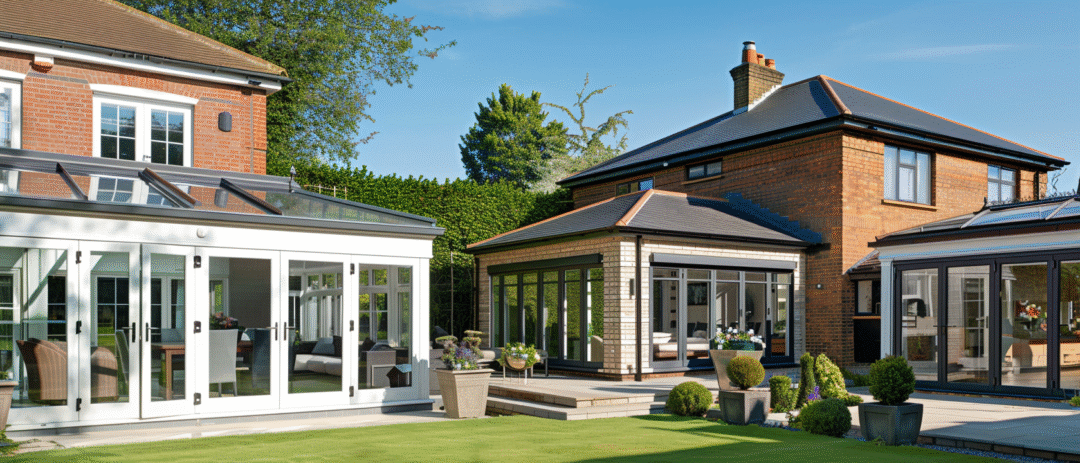
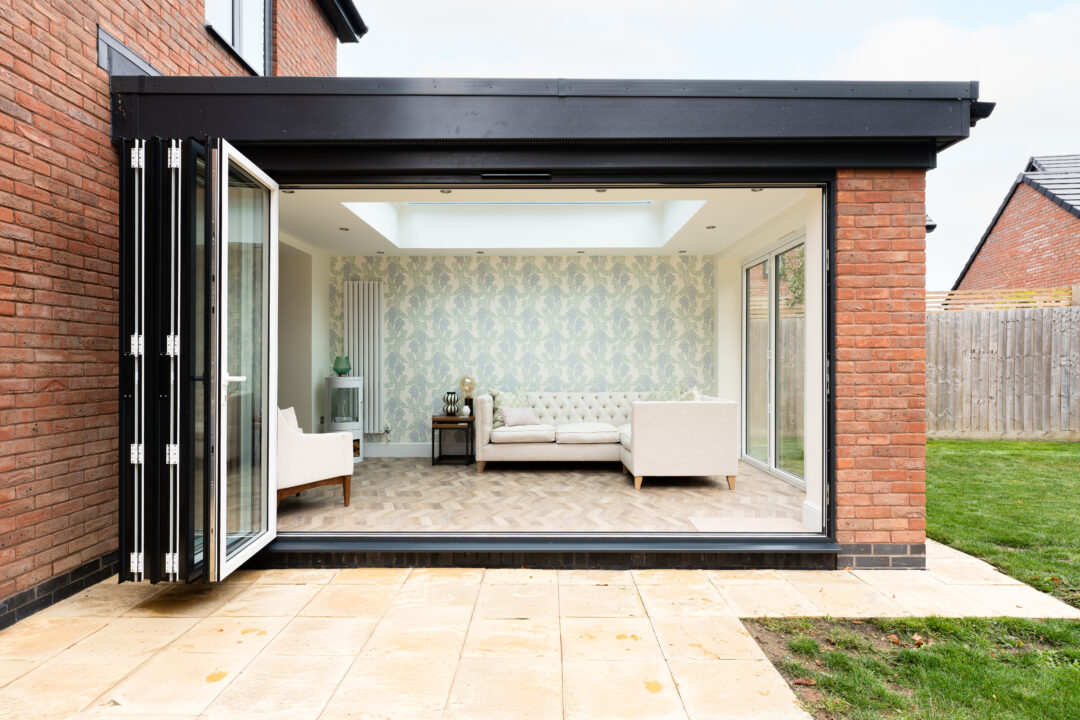
Real-world example:
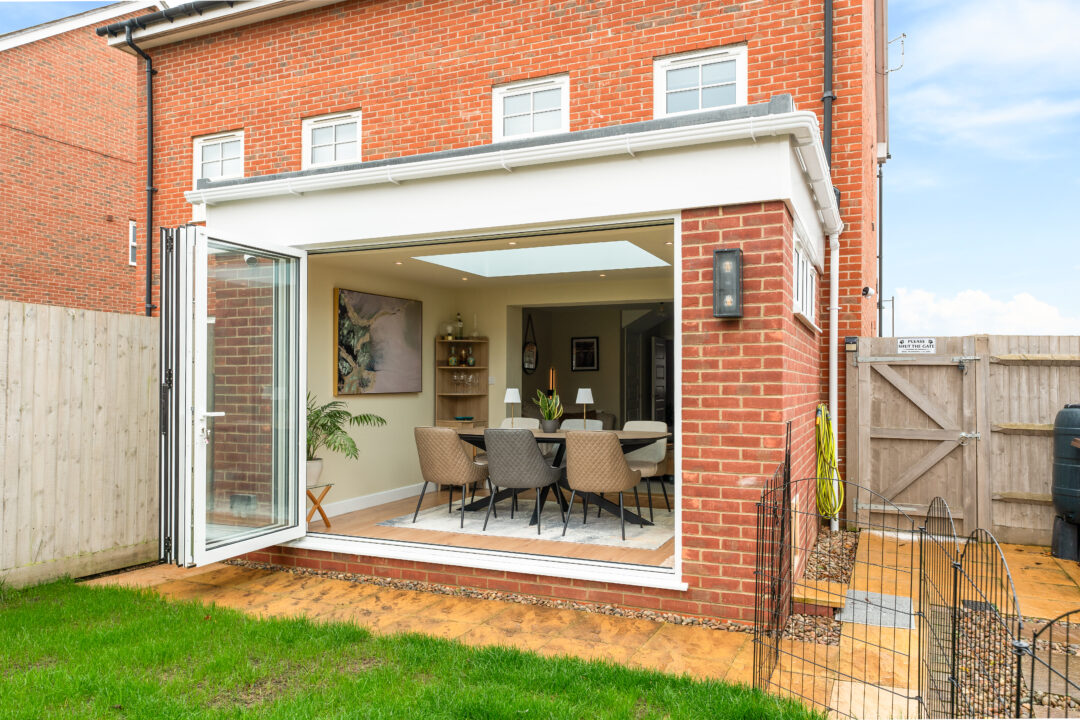
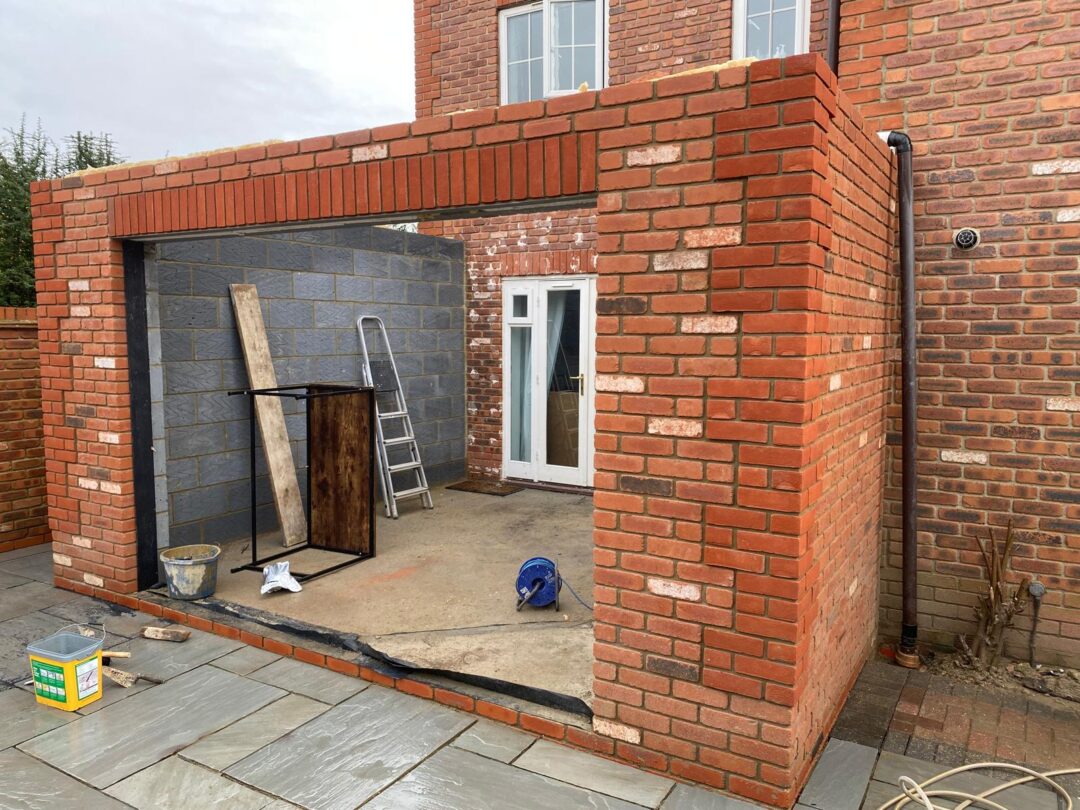
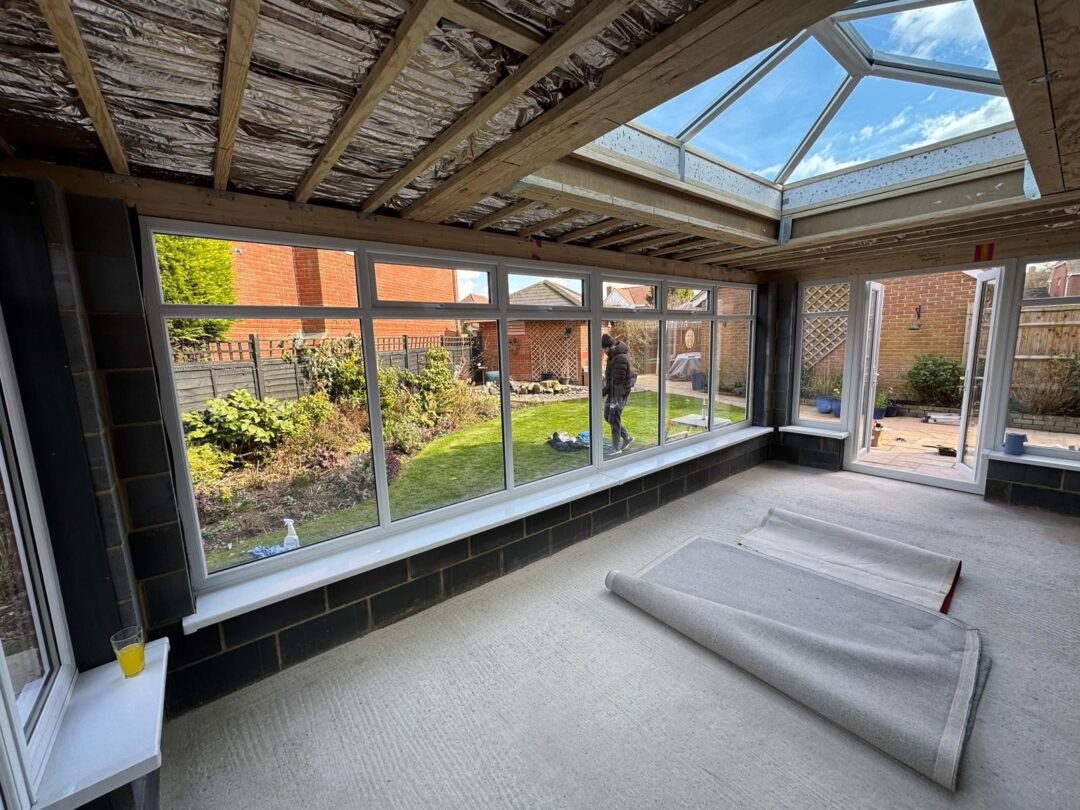
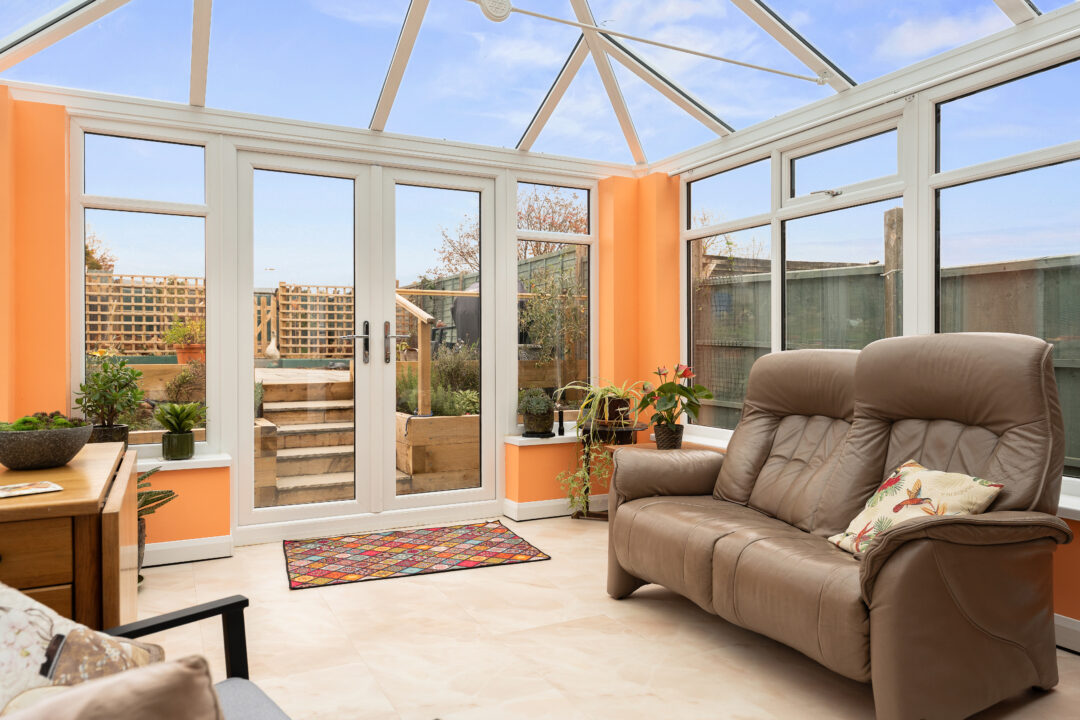
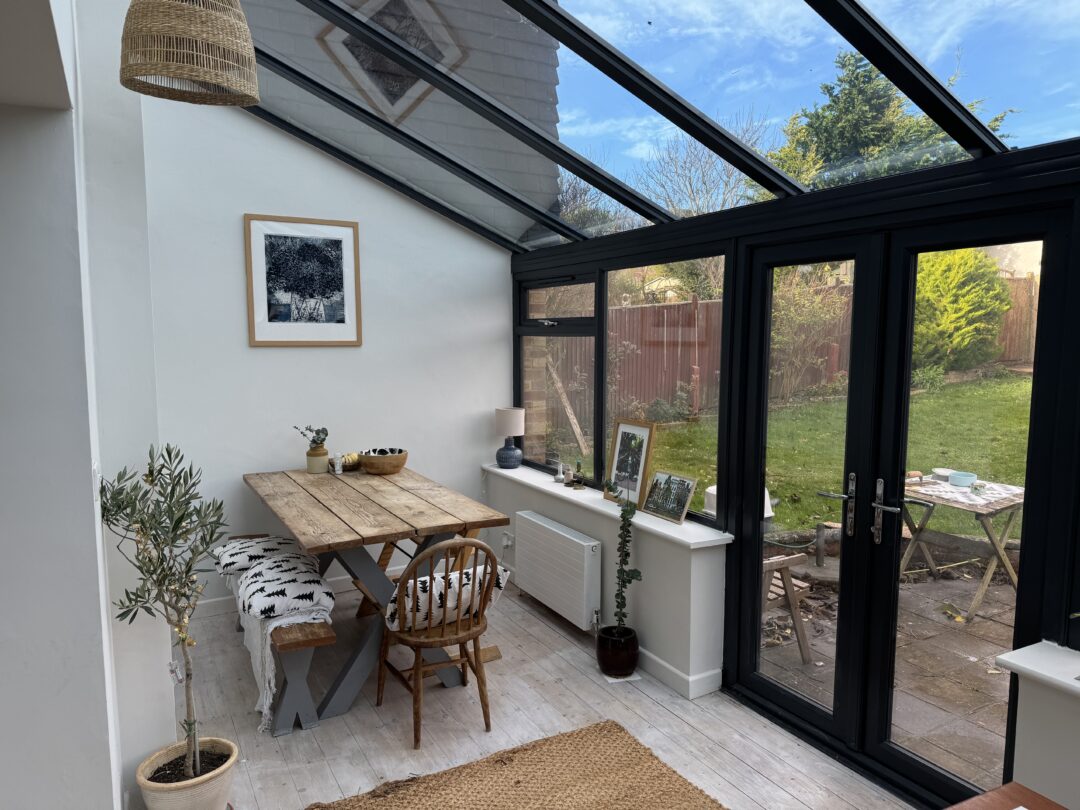
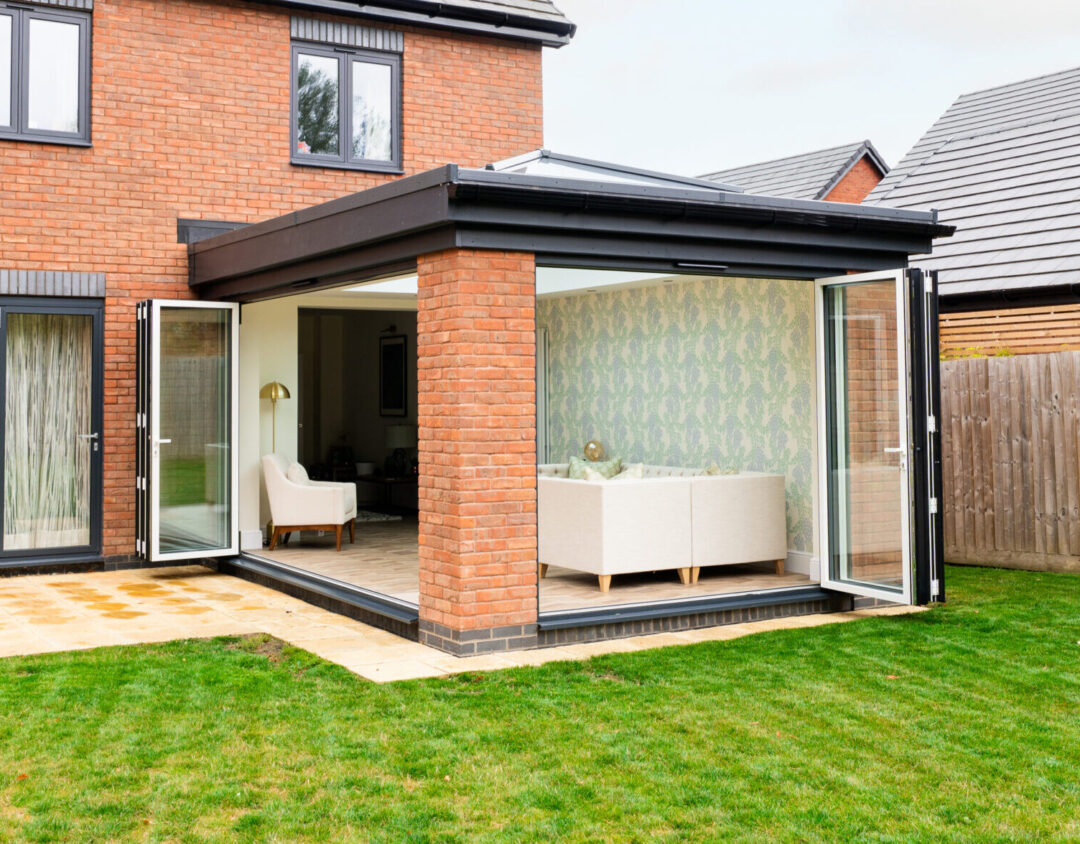
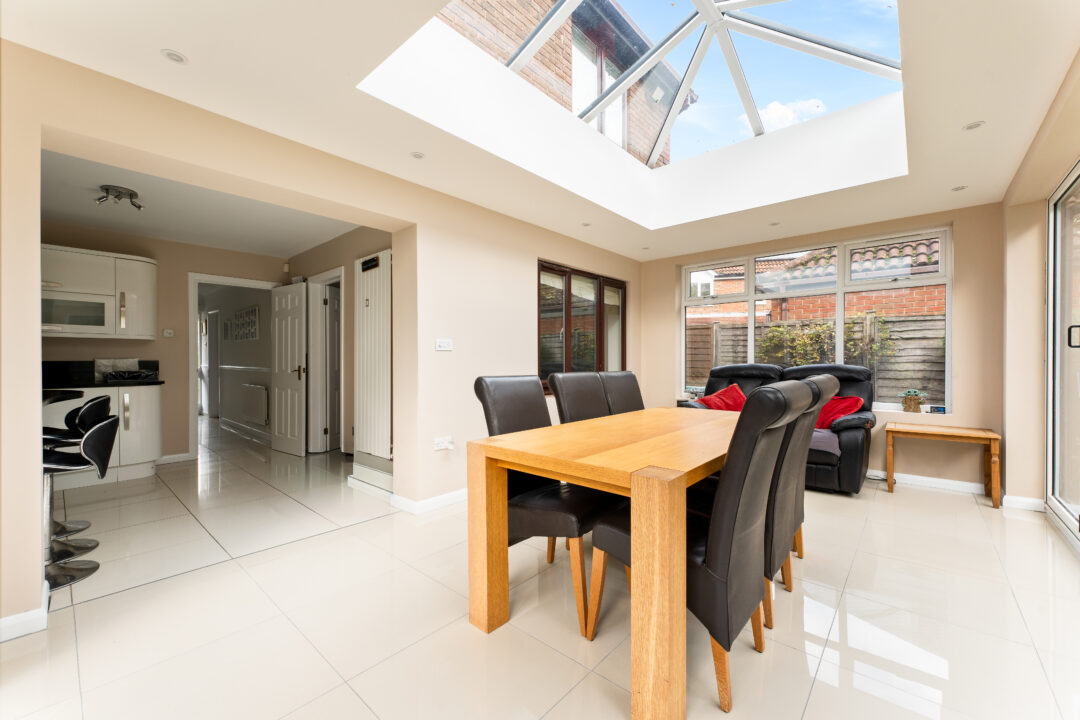
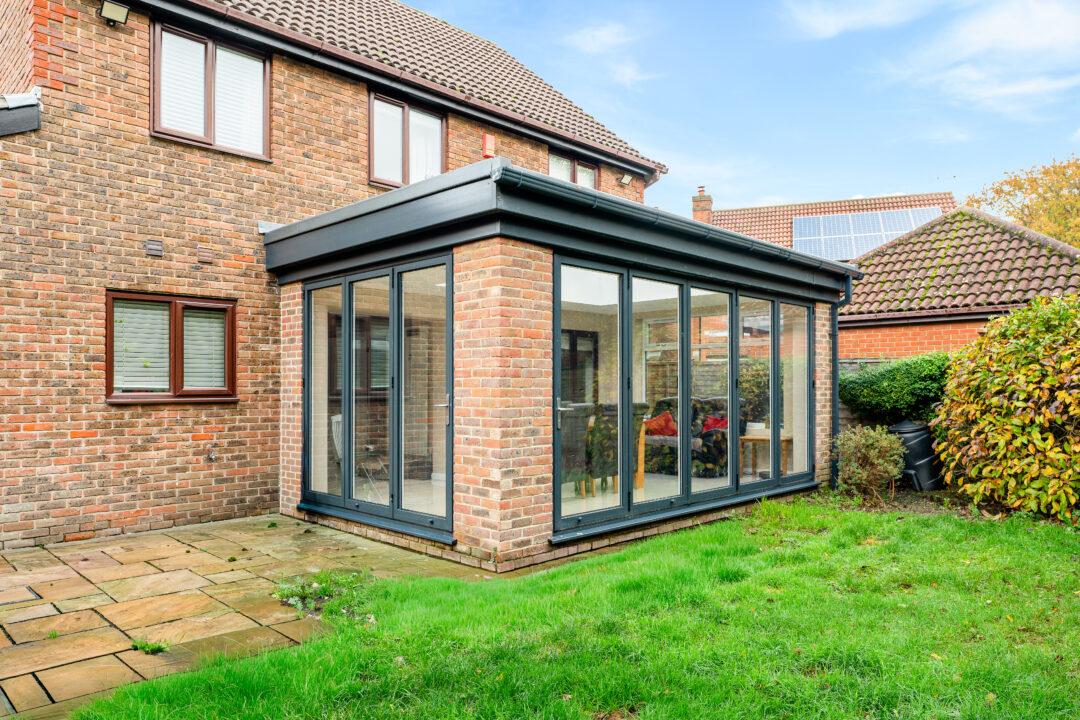
On this project, the goal was to improve flow without losing daylight in the existing home.
- The orangery was designed with controlled glazing and a lantern.
- The knock-through was sized carefully to balance openness and structure.
- Light now travels deeper into the original rooms, not just the new space.
When a Solid Extension Is Still the Right Answer
A traditional extension can be better when:
- Deep plans require more ceiling space for services.
- Privacy is a priority.
- Planning or design constraints limit glazing.
Storage and wall space outweigh light requirements.
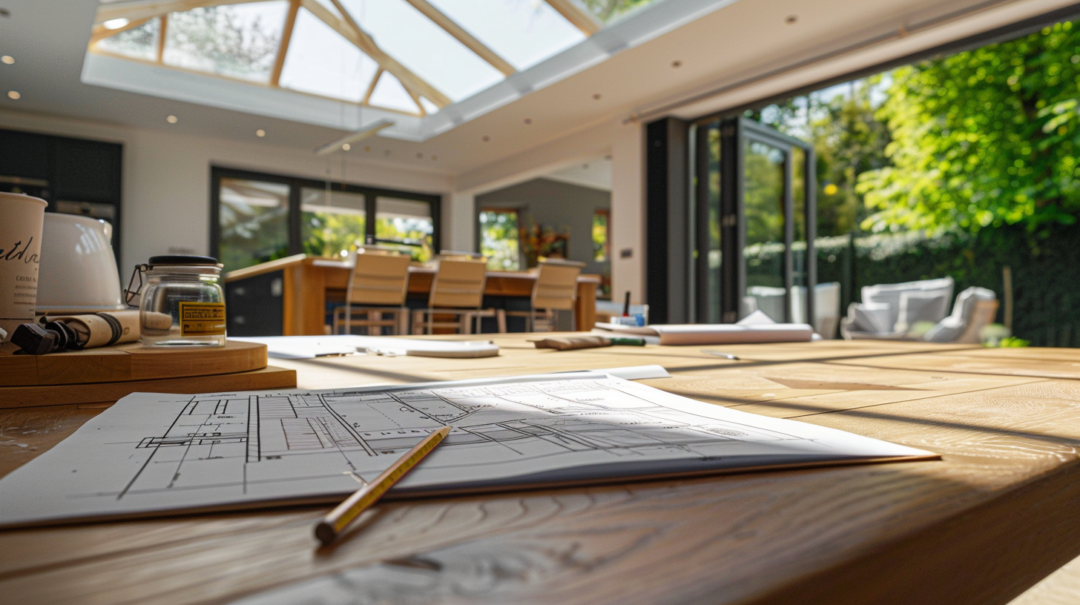
Design Rules We Use for Successful Open-Plan Living
- Preserve or add light into existing rooms.
- Make homeowners aware of any internal pillars early.
- Zone spaces for noise and quiet.
- Ensure natural circulation without creating corridors.
- Treat the orangery as part of the house, not an add-on.
Common Mistakes to Avoid
- Knocking through without considering light loss.
- Assuming steel is always required.
- Ignoring cost-effective layout options.
- Skipping proper structural calculations.
- Treating the orangery as a bolt-on room.
Living in the house during knock-through works
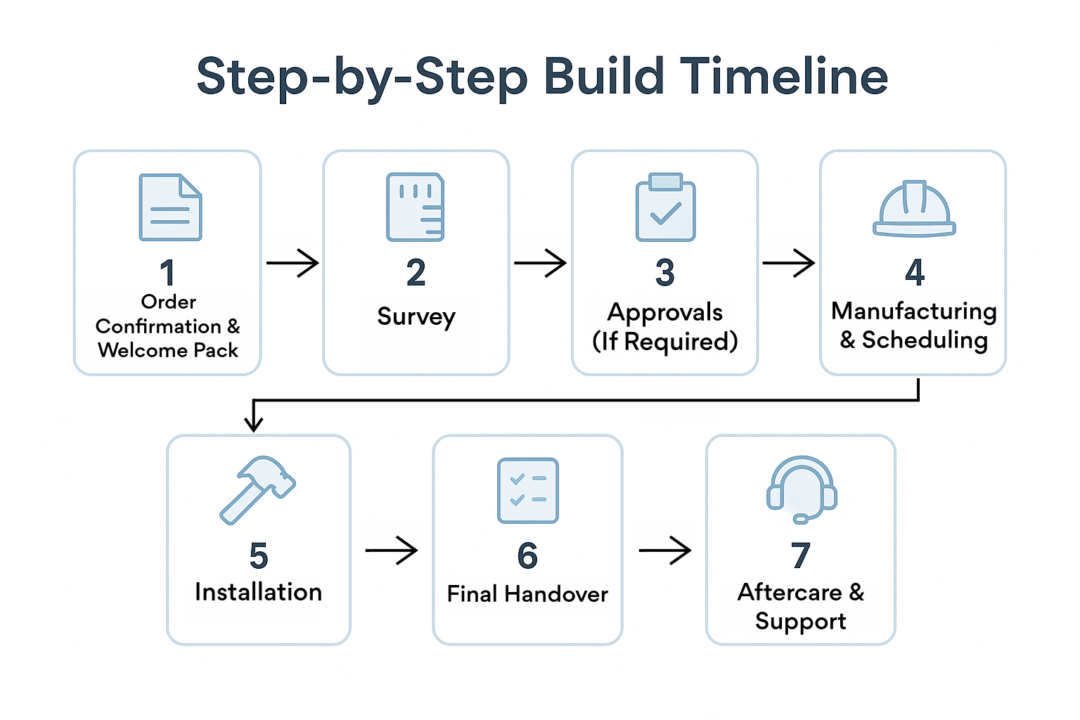
Most homeowners can stay in the house during works. The key is clear sequencing and knowing what happens at each stage of the build.
Typical realities include:
- Short periods of dust and noise.
- Temporary loss of access through the rear.
- Clear sequencing to minimise disruption.
Partial knock-throughs are usually far less disruptive than full wall removal.
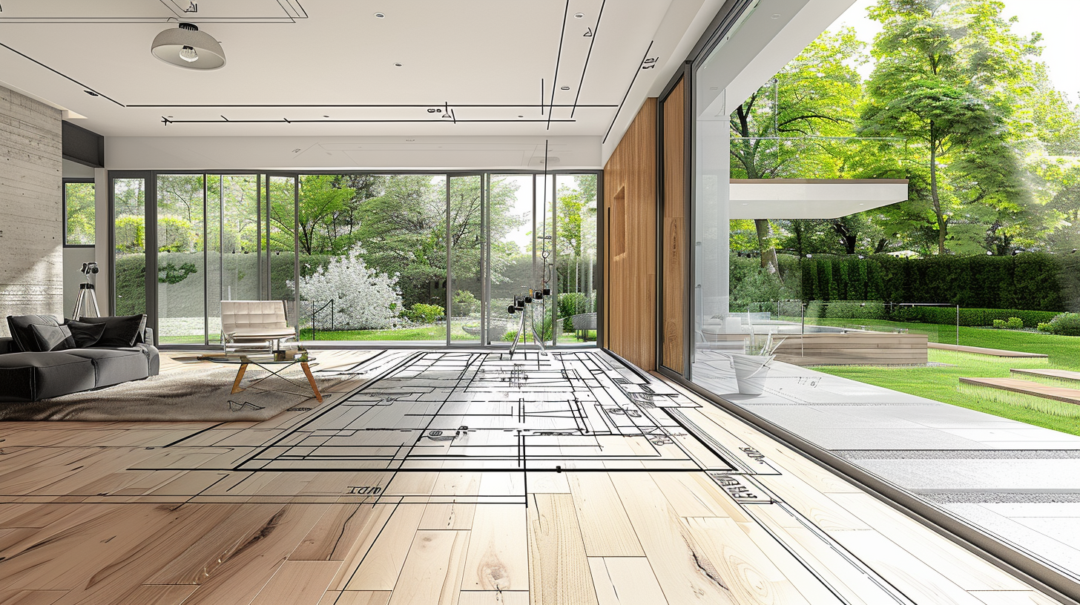
Planning and Building Regulations Explained Simply
Planning permission answers one question: can I build it?
Building Regulations answer another: has it been built properly and safely?
f you want a full breakdown of how planning works in 2026, including Permitted Development and Prior Approval, we explain it here.
For open-plan projects, Building Regulations are triggered by structural change, not by the idea of open-plan living itself.
If you only remember one thing, remember this:
- New or wider openings almost always need structural calculations and Building Regulations sign‑off.
- Replacing doors/windows in an existing opening is usually simpler, and often cheaper, than creating a brand‑new opening.
What matters most is whether a new opening changes how the house is supported.
When structural calculations and Building Regulations are not required
- You remove existing doors or windows.
- You do not increase the size of the opening.
- You install new doors, such as bifolds, into the existing gap.
In this case:
- No new structural support is needed.
- No structural calculations are required.
- No Building Regulations approval is needed for the opening itself.
This is why some open-plan layouts are simpler and more cost-effective than people expect.
When structural calculations are required
Structural calculations are required when:
- A new opening is created.
- An existing opening is widened, even slightly.
- Load from above needs to be redistributed.
This usually means installing a steel beam.
How Building Regulations apply in different knock-through scenarios
- New opening with a steel beam and a door installed (for example, bifolds)
-
- Structural calculations are required for the steel.
- Building Regulations apply to the steel only, not to the new structure as a whole.
- Structural calculations are required for the steel.
- New opening with a steel beam and no door installed (fully open plan)
-
- Structural calculations are required.
- Building Regulations apply to:
- The steel.
- The surrounding structure.
- The steel.
- Structural calculations are required.
Fire safety and load paths where relevant.
This is because the opening becomes part of the main habitable space, not a separated room.
The simple rule to remember
- If you create a new opening and install a door, Building Regulations usually apply only to the steel.
- If you create a new opening and leave it fully open, Building Regulations apply to the steel and the structure.
This distinction is important, and it is why layout decisions can affect cost and complexity.
Why this matters for homeowners
Understanding this early allows:
- Smarter layout choices.
- Better cost control.
- Fewer surprises once work starts.
It also explains why some open-plan projects feel straightforward, while others require more involvement.
How Precision Handles Open-Plan Projects
Our process removes uncertainty:
- Site visit and layout review.
- Light and structure assessment.
- Options presented, including when not to knock through.
- Clear costed routes.
- Fixed-price proposal for the agreed scope.
We will tell you when a solid extension is better than an orangery, and when keeping part of the wall makes more sense.
Final Takeaway
Open-plan living is not about removing walls for the sake of it.
It is about light, structure, comfort and how you want to live day to day.
A modern orangery is designed to make open-plan living work, not just look good.
 Book a free 30-minute consultation and we’ll help show you if an open-plan design works for you.
Thinking about creating an open-plan space in 2026?
We will help you decide whether an orangery or extension is the right move for your home, before any walls come down.